
OXYTOCIN
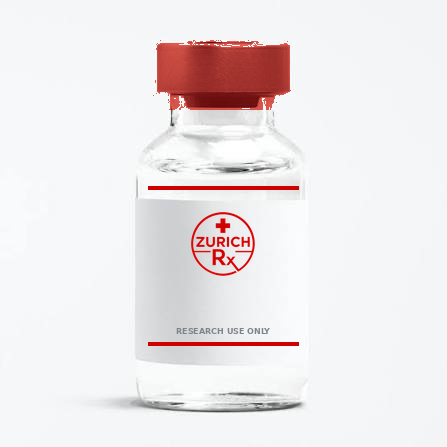
Compound Overview
Oxytocin is a naturally occurring nonapeptide hormone synthesized primarily in the hypothalamus and released from the posterior pituitary gland. It plays an essential role in neuroendocrine signaling and serves as one of the most extensively studied peptide hormones in physiology. Owing to its highly conserved structure and well-characterized receptor interactions, Oxytocin has become a valuable investigational peptide for research in neuroscience, endocrinology, molecular biology, and receptor pharmacology.
Researchers have extensively investigated Oxytocin for its interactions with the oxytocin receptor (OXTR), a G protein-coupled receptor (GPCR) expressed in the central nervous system and peripheral tissues. Experimental studies have examined its role in intracellular calcium signaling, neuroendocrine communication, smooth muscle physiology, social behavior, stress physiology, and reproductive biology. Oxytocin also serves as an important molecular probe for studying GPCR signaling, peptide-receptor interactions, and neuropeptide regulation in both in vitro and in vivo laboratory models.
As an investigational peptide, Oxytocin supports laboratory research involving neurobiology, endocrinology, receptor pharmacology, peptide chemistry, and molecular signaling.
Research Applications
Research applications are presented for educational and informational purposes only and do not imply approved therapeutic uses.
Product Specifications
| Purity | 99% |
| Appearance | White to Off-White Lyophilized Powder |
| Sequence | Cys-Tyr-Ile-Gln-Asn-Cys-Pro-Leu-Gly-NH2 (disulfide bridge between Cys1 and Cys6) |
| Molecular Formula | C43H66N12O12S2 |
| Molecular Weight | 1,007.19 g/mol |
| CAS Number | 50-56-6 |
| Storage | Store refrigerated at 2–8°C (36–46°F). For extended laboratory storage, maintain at −20°C or below. Protect from moisture and light. |
| Research Grade | Laboratory Research Use Only |
Available Sizes
Pricing: Inquire — contact our team for current pricing and availability.
Product Documentation
Every batch of OXYTOCIN is independently tested and assigned its own lot number. When you request documentation, include the product name and lot number printed on your vial so we can send the COA, HPLC, and MS data specific to the batch in your hand — not a generic reference sample. Request documentation →
Laboratory Handling
Store refrigerated immediately upon receipt to preserve peptide stability. For extended laboratory storage, freezing at −20°C or below is recommended. Protect the lyophilized peptide from moisture, excessive heat, and direct light. Following reconstitution, avoid repeated freeze-thaw cycles, as these may reduce peptide stability and biological integrity. Allow the vial to equilibrate to room temperature before opening to minimize condensation, and always use sterile laboratory equipment together with appropriate aseptic laboratory techniques. This product is intended for use only by qualified research personnel operating in controlled laboratory environments.
Selected Scientific Literature
- Du Vigneaud V, Ressler C, Trippett S. The Sequence of Amino Acids in Oxytocin, with a Proposal for the Structure of Oxytocin. Journal of Biological Chemistry.
- Gimpl G, Fahrenholz F. The Oxytocin Receptor System: Structure, Function, and Regulation. Physiological Reviews.
- Lee HJ, Macbeth AH, Pagani JH, Young WS III. Oxytocin: The Great Facilitator of Life. Progress in Neurobiology.
- Stoop R. Neuromodulation by Oxytocin and Vasopressin. Neuron.
Compare with related compounds
Other compounds researchers commonly browse alongside OXYTOCIN in Reproductive & Hormonal.
| Compound | Purity | Molecular Weight | CAS Number |
|---|---|---|---|
| OXYTOCIN | 99% | 1,007.19 g/mol | 50-56-6 |
| KISSPEPTIN-10 | 99% | 1,302.42 g/mol | 374675-21-5 |
Need a Certificate of Analysis?
Request COAs, HPLC, or MS documentation for OXYTOCIN.